
Handlines, juglines, and long poles—one repeatable plan for consistent fish.
Most folks fish like this: they pick one method, one rig, one bait… and hope the fish cooperate.
I don’t do it that way.
I run a system—a small set of tools and decisions that work together so I’m not reinventing the wheel every trip. It’s built around handlines, juglines, and long poles, with a simple, practical way to read water and keep bait in the zone. The goal isn’t “sport.” The goal is reliable fish for the table with gear that holds up on real water.
This is the Black Warrior Lures Fishing System.
The river rewards simplicity multiplied.
What I Mean by “System”
Here’s the framework:
- Read the water first.
- Choose the right tool for that water.
- Put bait in the fish zone and keep it there.
- Give it enough time to work.
- Adjust based on feedback—not mood.
When you fish like that, you’re not “trying stuff.” You’re running a plan.
The Philosophy: Why This Works
This system is built on a few beliefs that don’t change:
Every trip is feedback. I want information and repeatable results.
Consistency beats novelty. I’m not chasing the newest gimmick every weekend.
Simple gear beats complicated gear. Less fiddling, more fishing.
Most slow days are decision problems. Wrong water, wrong zone, wrong timing, or not enough soak time.
The Tools: Three Methods, One System
Think of these as different tools in one toolbox. Each one has a job.
1) Handlines: The Precision Tool
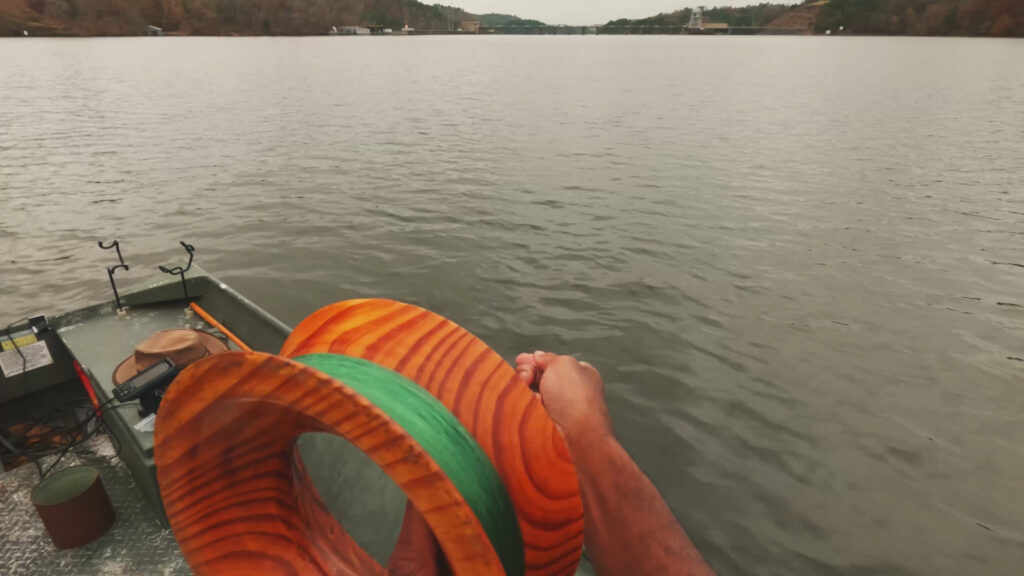
Handlines are what I use when I want direct control and real feel—working specific structure like holes, ledges, and edges. They’re simple, quiet, tough, and honest. If fish are there, you’ll learn something fast.
My handcrafted wooden handline reels live here: http://blackwarriorlures.com/product/handcaster/
2) Juglines: The Coverage Tool
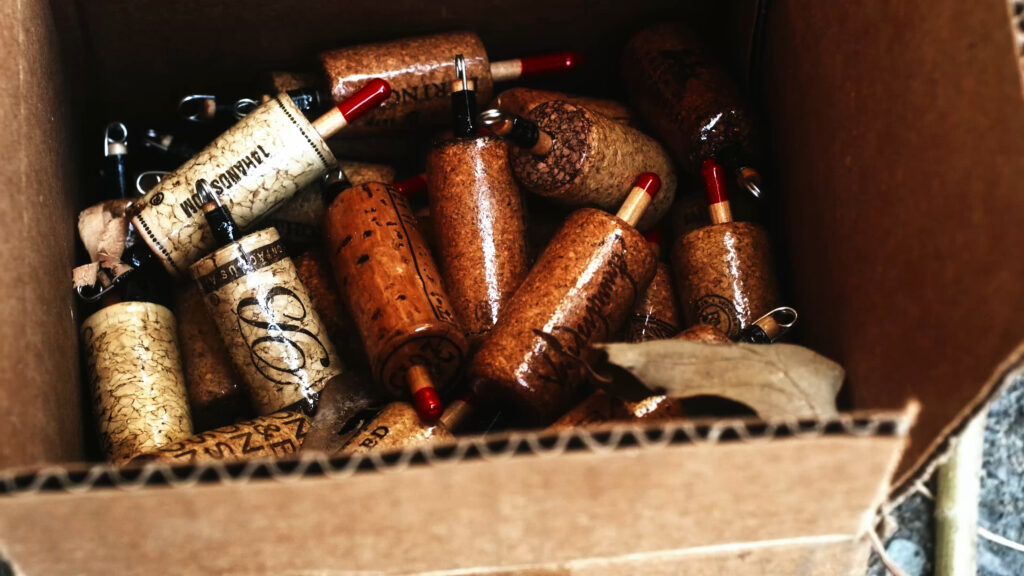
Juglines are how I keep bait soaking while I do other work. They’re not “lazy fishing.” They’re time leverage—especially when catfish are holding deep or the bite needs more soak time.
Jug fishing gear/category: http://blackwarriorlures.com/product/handline-cannonball-sinkers/
3) Long Poles / Cane Poles: The Close-Quarters Tool
Long poles are the workhorse for bluegill and tight cover. They also plug straight into the system because bluegill can be both bait and food. It’s efficient fishing—fast feedback, minimal fuss.
The Spine of Every Trip: Read Water First
If you skip this step, you’re just donating bait to the river.
I don’t start with “what rig should I use?”
I start with: what is this water doing today?
Step 1: Identify the water type
River current vs slack water. Tailrace vs lake. Rocky bottom vs mud. Shallow warming areas vs deep holes.
Step 2: Find the “fish reasons”
Fish sit where there’s a reason:
- depth change
- current seams/breaks
- cover
- hard bottom
- warmth
- bait presence
Step 3: Decide—hunt or soak?
- Hunt fish = handline / long pole
- Soak for fish = juglines
Then I match the tool to the conditions.
The System Flow (How a Normal Trip Runs)
Here’s the basic rhythm:
- Scout fast. Read water and locate “fish reasons.”
- Pick one soak method + one active method. No chaos.
- Start soak early. Let time work for you.
- Fish actively with intention. Work structure, cover, edges.
- Check, adjust, repeat. Change one variable at a time.
- Harvest and reset. End clean so the next trip starts clean.
That’s the system: simple, repeatable, and tough.
Seasonal Reality (No Textbook Required)
- Cold water: slower fish = longer soak time + tighter zones.
- Warming trends: shallow hard-bottom areas can wake up early.
- Hot season: current, shade, and oxygen matter more.
Mistakes This System Fixes
- Changing everything constantly
- Fishing pretty water with no fish reason
- Soaking too short then calling it “slow”
- Bringing too much gear and wasting time
Rules of Thumb
- Read water first. Always.
- One soak method + one active method is enough.
- Change one thing at a time.
- Time in the zone matters.
Quick Legal Note
Always check and follow local fishing regulations before using juglines or any setline method. Jug fishing isn’t legal everywhere, and rules can vary (tags/ID, hook limits, attendance requirements, where it’s allowed, etc.). Fish responsibly and legally.
Next Post
In the next post I’ll break down the bait side—how I use cast net shad (best bait) and bluegill (bait + food) to power the whole system.